To properly learn how to prepare land to build a house, start by conducting a land survey and securing necessary permits before clearing vegetation and debris from the site. This process requires soil testing and professional grading to ensure proper drainage and a stable foundation; additionally, marking utility lines and staking the home site prepares the area for construction.
Starting a custom home build in Northwest Missouri is an exciting milestone, yet many landowners find themselves overwhelmed by the hidden complexities of site preparation. It is common to focus on the architectural beauty of a house while overlooking the volatile nature of expansive clay soils or the logistical hurdles of rural utility access. These oversights often lead to costly delays and long-term structural issues. At Grindstone Utility Construction, we know that a successful build begins long before the first pour of the foundation. This guide provides a practical, expert roadmap for transforming your raw acreage into a buildable lot. You will learn the critical steps of surveying, clearing, and grading; specifically tailored to the unique climate and terrain of Missouri. We cover everything from managing drainage to securing utility hookups, ensuring your investment is protected from the ground up.
The Importance of Proper Site Preparation in Northwest Missouri
Proper site preparation serves as the foundational phase of any new single-family housing construction project. While national building guides often treat land prep as simple debris removal, building a house in Missouri requires a more technical approach to account for regional environmental pressures. In Northwest Missouri, especially across the rugged acreage of Daviess County and Jamesport, the beauty of the landscape hides significant engineering challenges.
The most critical factor in this region is the presence of expansive clay soil. This material swells when wet and contracts during dry spells, exerting lateral pressure that can easily compromise a structure. Coupled with the dramatic Missouri freeze-thaw cycle, which can shift foundations not anchored below the frost line, the risks are high. Learning how to prepare land to build a house in this specific climate involves more than just clearing trees; it requires professional oversight to manage drainage and soil stability. Without precise site engineering, even the best-designed custom home remains vulnerable to settling and structural failure.
What to Look for When Buying Land to Build a Custom Home in Missouri

Selecting a lot is the first real step in learning how to prepare land to build a house. In Northwest Missouri, the physical characteristics of a parcel dictate the complexity and cost of your new single-family housing construction project. Slope is a primary consideration; while a flat lot is easier to grade, a moderate incline often allows for a walkout basement. This is a highly sought-after feature in Jamesport and surrounding areas for its ability to provide storm shelter and additional square footage without increasing the building footprint.
Prospective buyers must also evaluate the distinction between incorporated and unincorporated land. In Daviess County, building on unincorporated acreage often means fewer zoning restrictions, but it requires more rigorous due diligence regarding road access and utility easements. If the land lacks a clear path for heavy equipment, you will need to budget for a stabilized construction entrance early in the process to prevent trucks from sinking into the soft Missouri earth.
Existing vegetation and geology can hide significant expenses. While a densely wooded lot offers privacy, the cost of clearing large-diameter timber and grinding stumps is significantly higher than clearing light brush. More importantly, a beautiful hillside view in our region can sometimes hide shallow limestone bedrock or a high water table. Striking rock during excavation requires specialized hammering equipment or blasting, while a high water table may necessitate advanced waterproofing and drainage systems. Identifying these variables during the 'choice' phase is essential for anyone building a house in Missouri who wants to avoid unexpected budget overruns before the foundation is even poured.
Step 1: Surveying, Permitting, and Marking Boundaries
Once you have identified a potential lot, the technical preparation begins with a professional land survey. This step is non-negotiable for anyone learning how to prepare land to build a house because it establishes legal boundaries and ensures your new single-family housing construction project adheres to mandatory setbacks. Relying on old fence lines or informal markers is a risk that can lead to costly legal disputes or the forced relocation of structures after construction has begun.
Concurrent with surveying, you must contact Missouri One Call by dialing 811. This service coordinates the marking of existing underground utilities, such as rural water lines or buried electric cables, which prevents dangerous and expensive strikes during the excavation phase. While building a house in Missouri within rural areas like Jamesport or Daviess County often involves fewer bureaucratic hurdles than in urban centers like Kansas City, you are not exempt from oversight. Local townships and county offices maintain specific requirements regarding how far a home must sit from the center of the road or neighboring property lines. Navigating these local codes and securing the necessary permits early prevents administrative delays. Establishing these boundaries and utility locations creates a clear roadmap for the physical work to follow.
Step 2: Land Clearing and Site Access for Missouri Acreage
After the boundaries are marked, the physical transformation of the lot begins. Determining how to prepare land to build a house requires a strategic approach to clearing brush, trees, and stumps. For new single-family housing construction in Daviess County, we utilize heavy duty skid steers for clearing undergrowth and large excavators to extract deep stumps. Leaving organic material in the ground is not an option; decaying roots eventually create underground voids that lead to foundation settling.
Timing is critical when building a house in Missouri. We recommend clearing in late fall or winter when the ground is frozen. Frozen earth supports the weight of heavy machinery, minimizing soil compaction and preserving the natural structure of the future building site. This schedule also avoids the heavy spring mud that makes Missouri sites nearly impassable for heavy equipment. To maintain site access, you must establish a stabilized construction entrance immediately. By creating a gravel driveway early, you ensure that excavators and material delivery trucks do not get stuck in the soft clay. For professional assistance with these initial stages, homeowners often contact Grindstone Utility Construction to ensure the site remains navigable and stable throughout the duration of the build.
Step 3: Managing Expansive Clay Soil and Soil Testing
With the site cleared and accessible, the focus shifts to the invisible variable that determines the longevity of your home: the soil composition. Northwest Missouri is notorious for having soil rich in expansive clay. This material is highly reactive to moisture; it swells significantly when saturated during spring rains and shrinks during the dry summer months. This constant cycle of expansion and contraction creates lateral and vertical pressure that can easily buckle a foundation if the ground is not properly stabilized.
When determining how to prepare land to build a house, hiring a geotechnical engineer to perform soil testing is a critical investment. These professionals use soil borings to determine the load-bearing capacity of the earth, ensuring the ground can support the weight of the structure without excessive settling. If tests reveal a high plasticity index, which is common when building a house in Missouri, you cannot simply pour concrete onto the raw earth.
Standard practice for high-quality new single-family housing construction involves over-excavation. This technical solution requires digging deeper than the standard foundation depth to remove problematic clay layers. We then backfill the area with non-expansive material, such as compacted crushed stone or engineered fill. This creates a stable platform that does not shift with moisture cycles. Additionally, a thick gravel sub-base must be installed. This gravel acts as a capillary break, preventing moisture from wicking up through the clay and reaching the concrete. Without these specific Missouri soil management techniques, even a perfectly poured foundation remains at risk of structural failure.
Step 4: Excavation and Grading for Proper Drainage
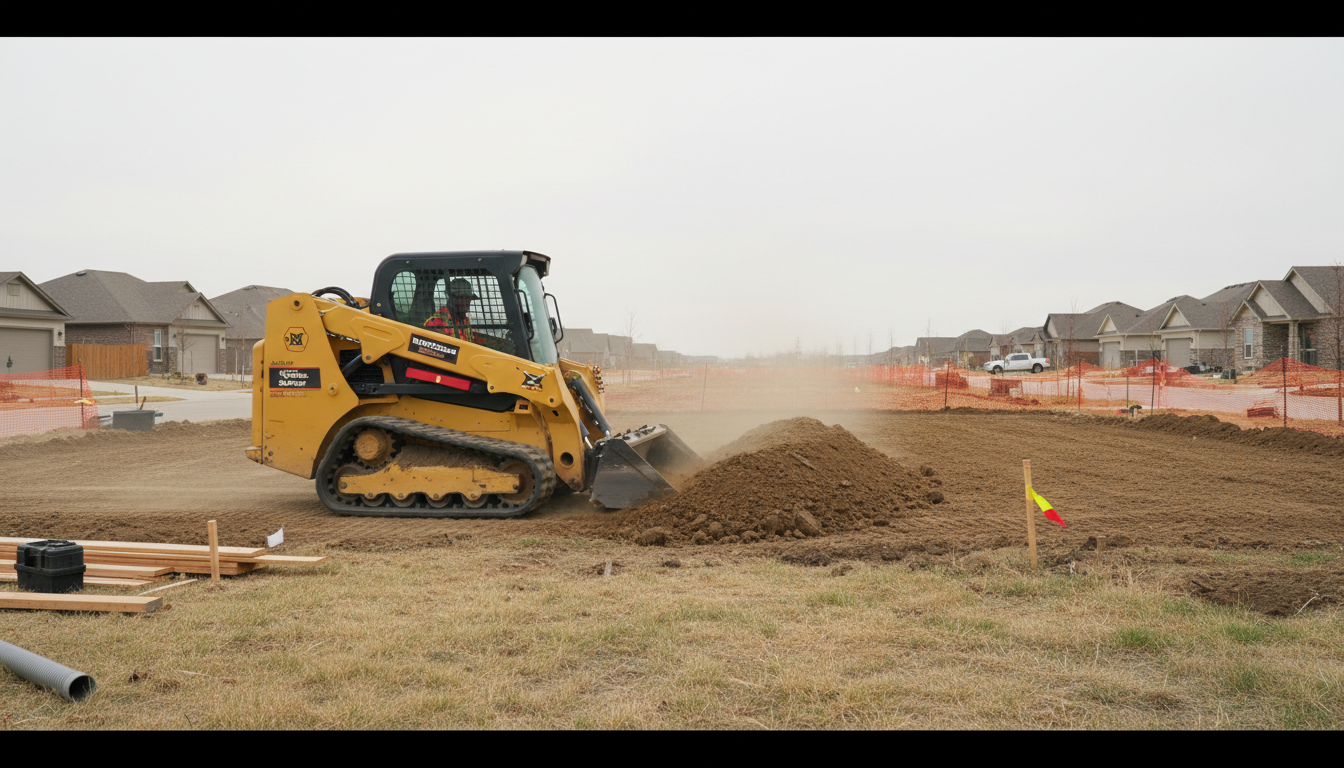
After stabilizing the soil, we begin excavation to shape the actual footprint of the home. This phase focuses on rough grading, which involves moving earth to create a level building pad while simultaneously directing the flow of surface water. For those learning how to prepare land to build a house, understanding that dirt work is primarily a form of water management is vital.
In Jamesport and across Northwest Missouri, basement flooding is a frequent complaint for homeowners who skip professional site engineering. To prevent this, we implement a positive slope, ensuring the ground falls away from the foundation at a minimum rate of six inches within the first ten feet. This grade ensures that heavy rain shed from the roof or running across the lot is diverted away from the house rather than pooling against the basement walls. Proper grading is the primary defense against hydrostatic pressure; when soil becomes saturated, it exerts immense force that can crack masonry. By moving water away, we keep the backfill material dry and stable.
For lots near the creeks and ponds common in Daviess County, erosion control is mandatory. We install silt fences and straw wattles to prevent sediment runoff from entering local waterways during the new single-family housing construction process. This protective measure keeps your topsoil on your property and protects the regional watershed while you are building a house in Missouri.
Preparing for Foundations in a Freeze Thaw Climate
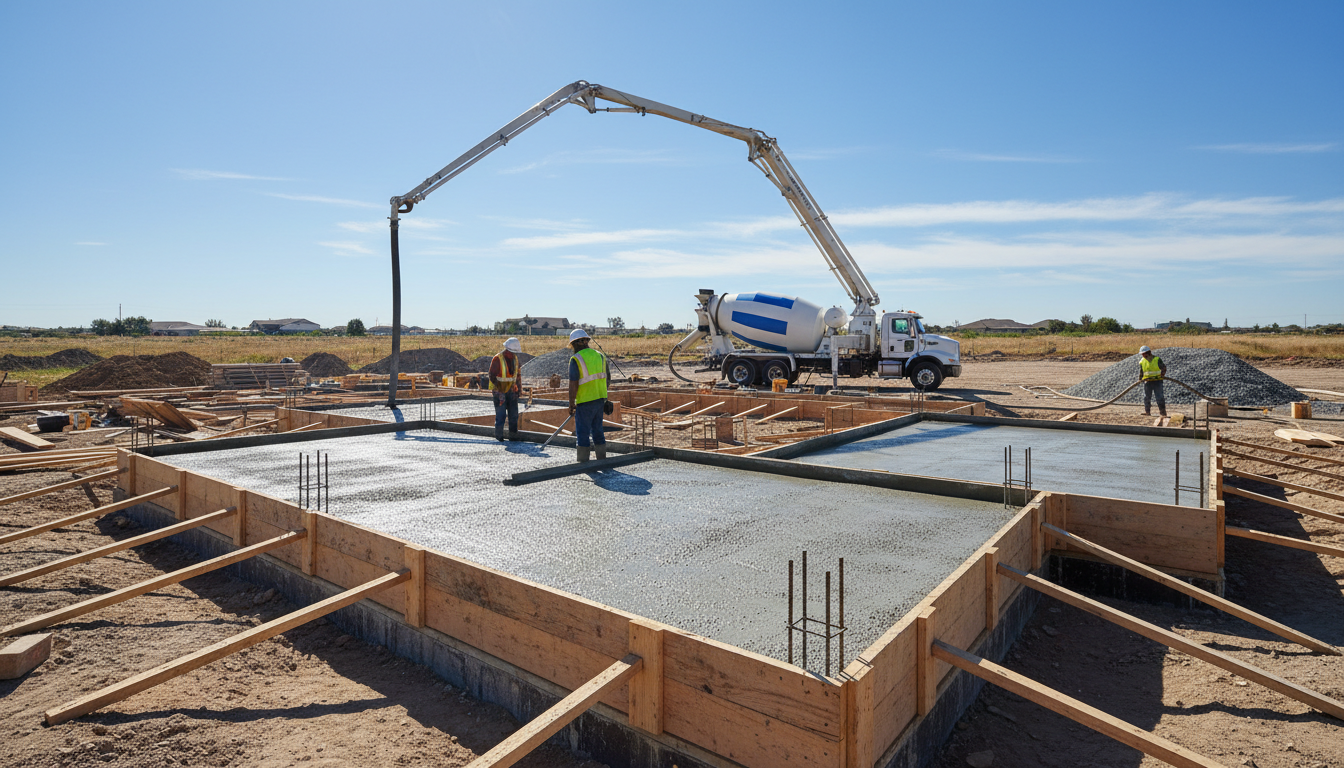
Once the site is graded, we prepare the ground for the actual footings. In Northwest Missouri, the freeze-thaw cycle is a primary concern for any new single-family housing construction project. The frost line in our region typically ranges from 30 to 36 inches deep. Executing this phase correctly is a vital part of learning how to prepare land to build a house that withstands decades of Missouri winters. If you are building a house in Missouri, your footings must be set below this depth. When water in the soil freezes, it expands; if the foundation sits too shallow, this expansion creates frost heave, which can shift or crack the entire structure.
Homeowners must choose between slab-on-grade foundations and full basements. While slabs are functional, full basements remain the gold standard for residential properties in Jamesport and Daviess County. They provide essential storm safety during severe weather and valuable climate-controlled storage. To protect these structures, we use layers of clean crushed stone and gravel around the future foundation. These materials provide a high-permeability pathway, allowing groundwater to move toward the drain tile system rather than sitting against the concrete. This drainage layer prevents the buildup of hydrostatic pressure that commonly causes basement leaks. For specific site evaluations, you should contact Grindstone Utility Construction to determine the ideal foundation depth for your specific lot.
Utility Hookups: Septic, Wells, and Rural Missouri Connectivity
Establishing infrastructure is the final hurdle in learning how to prepare land to build a house before vertical construction begins. In rural Jamesport and Daviess County, you cannot assume utility access is a simple connection. A percolation test, or perc test, is the first priority. This test measures the soil's water absorption rate, which dictates the design of your septic system. Because the drain field requires a specific location and size based on these results, we complete this before finalizing the home's placement to ensure proper gravity flow and adherence to setback requirements.
For water access, we evaluate the proximity of rural water districts versus the necessity of drilling a private well. While rural water offers consistency, drilling a well in Northwest Missouri requires deep boring to reach a reliable aquifer, often exceeding several hundred feet depending on the specific elevation of your lot.
Electric connectivity requires early coordination with local cooperatives. Lead times for pole sets or line extensions can range from six to twelve weeks. Before work begins, ensure you have completed this checklist:
Schedule a site visit with the cooperative field engineer.
Secure necessary utility easements from neighbors if the line crosses private property.
Determine placement for temporary construction power vs. permanent service.
Verify transformer availability with the provider.
Managing these logistical threads is a hallmark of professional new single-family housing construction. To coordinate these complex rural hookups, contact Grindstone Utility Construction to ensure your project for building a house in Missouri stays on schedule.
Cost to Prepare Land for Building a House in Missouri

Financial planning for new single-family housing construction requires looking beyond the sticker price of the raw acreage. While the total cost of building a house in Missouri on private land is often more economical than purchasing a finished lot in a subdivision, the initial site preparation involves significant hidden costs. For a typical project in Northwest Missouri, these expenses range from $15,000 to $50,000 depending on the complexity of the terrain and the requirements of the soil.
Category | Estimated Cost Range (Missouri) |
|---|---|
Land Clearing | $2,500 - $6,000 per acre |
Excavation and Rough Grading | $5,000 - $18,000 |
Utility Installation (Septic and Well) | $12,000 - $28,000 |
Soil Stabilization and Gravel Base | $3,000 - $7,000 |
Professional clearing in Jamesport varies based on tree density; removing mature timber and grinding deep stumps costs significantly more than clearing light brush. Excavation costs fluctuate based on whether you require a full basement and the volume of clay soil that must be replaced with stable fill. If you are calculating how to prepare land to build a house, prioritize the utility budget. A deep well or a complex septic lateral field can quickly move a project toward the higher end of the estimate. To receive a precise quote for your specific lot, contact Grindstone Utility Construction for a professional site evaluation.