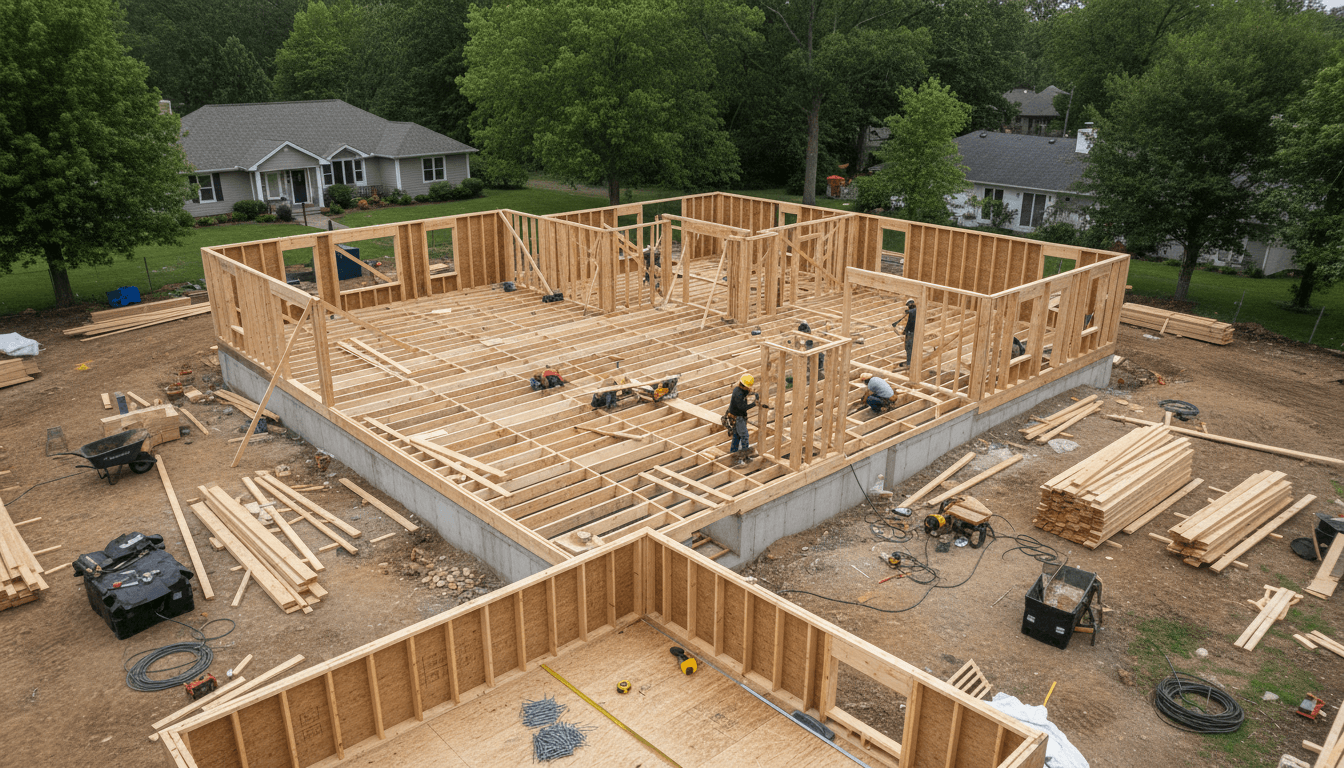
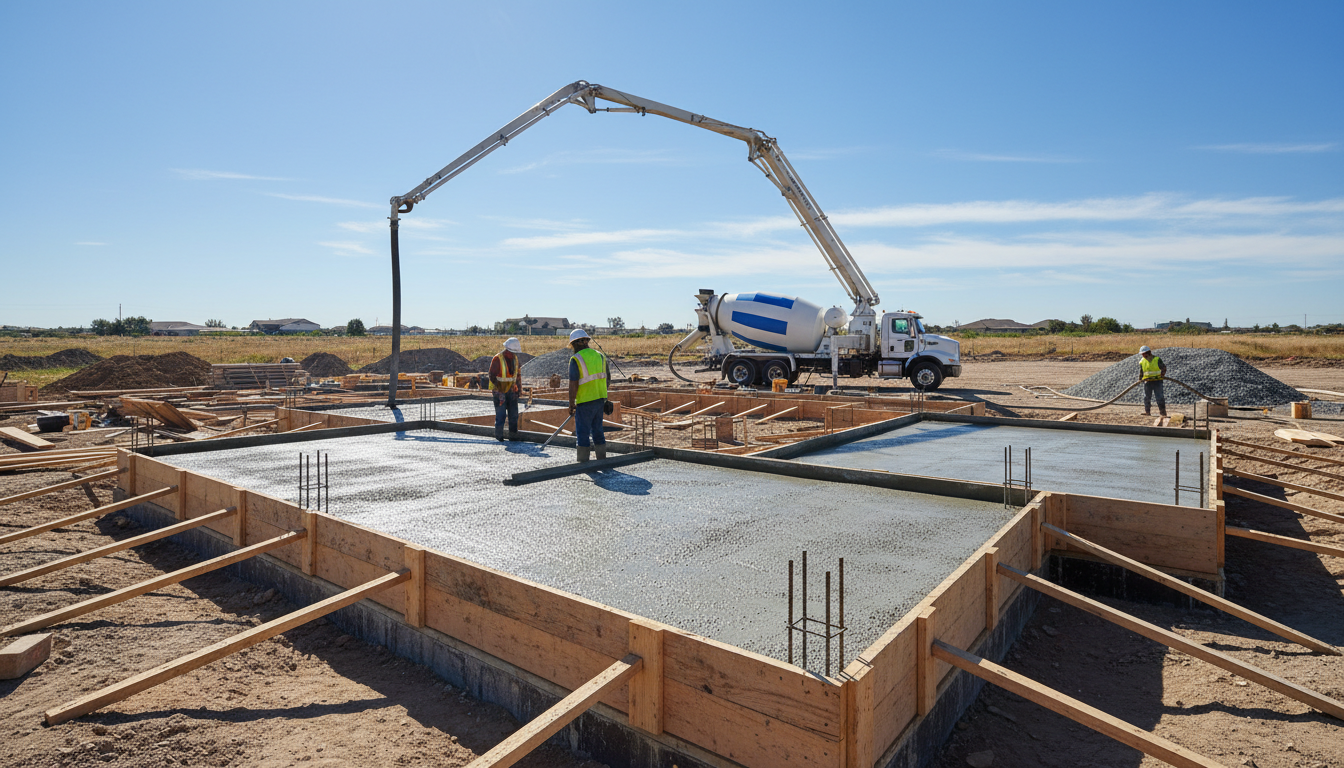
A reinforced basement or crawl space with deep footings is often the best foundation for clay soil Missouri custom home construction because these designs provide essential stability against expansive soil movement. To prevent shifting, homeowners should ensure the build includes professional drainage systems and high-quality moisture barriers that account for Missouri's unique climate and soil density.
Building a custom home in Jamesport means contending with the relentless nature of Missouri clay. This expansive soil creates a unique challenge for homeowners; it swells when wet and shrinks during the dry summer months, putting immense pressure on your structural footprint. If your site preparation ignores these soil dynamics, you risk costly settling and foundation cracks before the paint is even dry. At Grindstone Utility Construction, we understand that a house is only as reliable as the ground beneath it. This guide explores the most effective foundation types for our local geography, including slabs, crawl spaces, and full basements. We will also examine critical factors such as frost line depth, specialized site preparation techniques, and the water management systems necessary to protect your investment from the shifting Missouri landscape.
Understanding Missouri Clay Soil and Your Foundation
Building a home in Jamesport or anywhere across Daviess County requires a deep understanding of the ground beneath the heavy equipment. North of Highway 36, the soil profile differs significantly from the rocky chert found in the Missouri Ozarks. In this region, we primarily deal with heavy, fine-grained expansive clays often derived from glacial till and loess. These soils act like a massive underground sponge. During a wet Missouri spring, the clay particles absorb water and swell, exerting thousands of pounds of upward and lateral pressure against concrete. Conversely, during our notoriously hot and dry summers, the moisture evaporates, causing the soil to shrink and pull away from the structure.
This constant cycle of expansion and contraction is the primary culprit behind foundation shifting, wall rotation, and localized settling. Because the soil movement is rarely uniform across a building site, one corner of a home may heave while another remains stable, leading to structural stress. To mitigate these risks, professional residential building services must account for the specific plasticity of the local earth. When you prepare your land for building, recognizing that North Missouri clay is a moving entity is the first step in engineering a lasting structure.
Selecting the best foundation for clay soil Missouri custom home projects starts with acknowledging that the soil will move. The engineering goal is to build a foundation rigid enough to resist that force or deep enough to bypass the most volatile soil layers near the surface. For expert guidance on your specific site and soil conditions, contact Grindstone Utility Construction to discuss your project requirements.
Frost Line Depth for North Missouri Home Construction
Daviess County winters present a specific challenge that goes beyond simple temperature readings. For homeowners in Jamesport and throughout the region north of Highway 36, understanding frost line depth is critical to structural integrity. While the actual frost line typically reaches 25 to 30 inches deep during a standard North Missouri winter, local building codes and best practices usually require footings to be set at a minimum of 36 inches.
Setting footings below this 36 inch threshold ensures the base of your home rests on soil that remains unfrozen year round. If footings are placed too shallow, moisture within the clay soil freezes and expands, a process known as frost heaving. This expansion can exert enough upward force to lift a concrete foundation, leading to significant structural damage when the ground eventually thaws and the house settles unevenly.
When you prepare your land for building, you must account for these seasonal temperature swings. At Grindstone Utility Construction, we recognize that the combination of Daviess County’s expansive clay and deep frost penetration requires precise excavation. Proper depth is the first line of defense in ensuring the best foundation for clay soil Missouri custom home projects remains stable for decades. Our professional residential building services prioritize these technical requirements to prevent the costly repairs associated with shallow footing placement.
Comparing Foundation Types: Slab, Crawl Space, and Basement
While footing depth addresses vertical movement from frost, the choice of foundation style determines how the entire structure interacts with the lateral and expansive pressures of the surrounding earth. In Daviess County, each of the three primary foundation types presents a unique set of trade-offs when interacting with our specific soil profile.
### Slab-on-Grade This is often the most economical choice, involving a concrete pad poured over a prepared subgrade. However, in Jamesport, a slab is only as stable as the dirt beneath it. Because our clay expands so aggressively, we cannot simply scrape the topsoil and pour. Successful slab construction requires meticulous soil compaction and often the import of non-expansive structural fill to create a stable raft. When you prepare your land for building, you must ensure the sub-base is engineered to resist the clay's seasonal heave.
### Crawl Space A crawl space foundation uses a perimeter stem wall to elevate the living area above the ground. This provides a critical buffer between the home’s floor system and the damp clay. It offers easier access for future plumbing or electrical repairs, which is a significant advantage over a slab. The primary challenge here is moisture management; a heavy vapor barrier and proper ventilation are non-negotiable to prevent the clay sponge from creating a humid environment that could lead to mold or wood rot in the floor joists.
### Full Basement Basements are a staple for homeowners seeking professional residential building services in Missouri due to the immediate square footage gain and essential storm safety during tornado season. However, they are the most vulnerable to the hydraulic pressure of wet clay. The clay in North Missouri holds water against the walls, creating immense inward force. A basement in this region requires high-end waterproofing, heavy-duty rebar reinforcement, and a robust exterior drainage system to prevent bowed walls or seepage.
Foundation Type | Primary Benefit | Clay Soil Challenge |
|---|---|---|
Slab-on-Grade | Most cost-effective; eliminates floor squeaks | Requires intense sub-grade compaction |
Crawl Space | Utility access; protection from ground moisture | Needs strict humidity and pest control |
Basement | Storm safety; maximum square footage | High hydrostatic pressure and drainage costs |
Selecting the best foundation for clay soil Missouri custom home projects requires balancing these functional benefits against the long term maintenance needs of the site. If you are unsure which structure suits your specific lot, contact Grindstone Utility Construction to evaluate your site's topography and soil conditions.
What is the Best Foundation for Clay Soil in Missouri?
Determining the best foundation for clay soil Missouri custom home projects requires a design that prioritizes rigidity and depth. For the heavy clay profiles found around Jamesport, a T-shaped foundation or a reinforced stem wall on footings is consistently the most stable choice. These structures utilize a wide concrete footing placed below the 36 inch frost line, providing a solid base that resists the vertical heaving of the soil. By spreading the load across a broader surface area, the footing prevents the concentrated sinking or lifting that often plagues poorly engineered builds.
In contrast, floating monolithic slabs are often too reactive for North Missouri’s environment. Without significant and costly soil replacement, where native clay is excavated and replaced with several feet of compacted granular fill, a floating slab will tilt and flex as the clay hydrates and dehydrates. This movement inevitably leads to cosmetic and structural failures. To combat the immense lateral pressure of expanding clay, professional residential building services must utilize high-strength, air-entrained concrete mixes. This specific type of concrete contains microscopic air bubbles that help the material withstand internal stresses and localized temperature fluctuations within the ground.
Heavier rebar reinforcement schedules are also mandatory. Steel rebar provides the tension strength that concrete lacks, allowing the foundation walls to hold firm against the thousands of pounds of pressure exerted by the surrounding soil. When you prepare your land for building, ensuring your foundation is engineered for these specific local conditions is the only way to safeguard your investment. For a detailed site evaluation of your property, contact Grindstone Utility Construction to review your architectural plans against local soil data.
Essential Site Prep: Why You Cannot Pour Concrete Directly on Clay Soil

A frequent question from Jamesport landowners is whether concrete can be poured directly onto the native North Missouri clay. The answer is a firm no. Placing concrete on raw clay is a recipe for long-term failure because it allows for direct moisture wicking and uneven settling. To properly prepare your land for building, the native soil must be over-excavated to accommodate a 4 to 6 inch compacted granular base of clean gravel or crushed stone.
This granular layer serves as a critical capillary break. Because clay is non-porous and holds water tightly, it creates a path for moisture to migrate upward through surface tension. The stone layer breaks this cycle, providing a drainage plane that prevents water from being trapped against the bottom of the foundation. It also creates a uniform, stable surface that can be compacted more effectively than raw clay, ensuring the weight of the structure is distributed evenly.
Following the stone base, we install a heavy-duty vapor barrier, typically a 10 or 15 mil polyethylene sheet. This barrier is essential because the 'clay sponge' remains damp year-round. Without it, moisture vapor migrates through the porous concrete slab, causing floor finishes to peel and creating an environment ripe for mold. Professional residential building services prioritize these sub-grade layers to ensure the best foundation for clay soil Missouri custom home projects remains dry and structurally sound. To discuss the specific site preparation needs for your property, contact Grindstone Utility Construction to speak with a regional expert.
Water Management: The Secret to Foundation Longevity
Even with a perfect gravel base and vapor barrier, the long term health of your home depends on controlling the environment around the concrete. In North Missouri, managing water is roughly 90% of foundation success. When liquid saturates the clay near your footings, it triggers the heavy expansion discussed earlier; keeping the soil moisture level consistent is the primary goal for structural stability.
Effective water management requires a multi layered approach. We install perforated footing drains at the base of the foundation to collect groundwater and carry it away before it creates hydrostatic pressure against the walls. For Jamesport’s rural and semi-rural lots, we often utilize surface swales, which are shallow, grass lined channels designed to redirect heavy runoff from higher ground before it reaches the build site.
Proper site grading is the most critical element. The ground must slope away from the house at a minimum of six inches over the first ten feet. Furthermore, downspout extensions are non negotiable; they must discharge water at least ten feet away from the clay sponge zone surrounding the home. At Grindstone Utility Construction, we prioritize site work and utility placement from the very start of the project. Ensuring water moves away from the structure from day one is essential to maintaining the best foundation for clay soil Missouri custom home projects. If you are ready to start your build, contact Grindstone Utility Construction to discuss professional residential building services and how to properly prepare your land for building.