Energy efficient new home construction relies on a combination of high-quality insulation, airtight building envelopes, and strategic design features like radiant floor heating. Homeowners should prioritize low HERS scores and proper insulation installation to ensure long-term comfort and significant utility savings throughout the year.
Missouri homeowners often face a frustrating cycle of soaring utility costs and inconsistent indoor temperatures, which are usually the direct result of construction methods that fail to account for our state’s specific climate demands. Building a new home represents a significant financial commitment, but without a rigorous focus on the building envelope, that investment can quickly become a liability. At Grindstone Utility Construction, we understand that true energy efficiency is built from the ground up, starting with precision engineering rather than just high-tech gadgets. This guide examines the essential components of high-performance construction, including advanced air sealing techniques, optimal insulation choices for local weather, and the importance of HERS scores. You will learn how to integrate superior HVAC systems and windows into your design, as well as the critical questions to ask your builder to ensure your Missouri home remains comfortable and cost-effective for decades.
Energy Efficient New Home Construction: The Missouri Climate Factor
Building in Northwest Missouri requires more than just meeting minimum codes; it requires accounting for the volatile swings of the Midwest. Jamesport sits in a transitional area within Department of Energy Climate Zones 4 and 5. This means a Missouri custom home builder must design structures capable of withstanding sub-zero winter blasts one month and 100-degree, high-humidity heatwaves the next.
True energy efficient new home construction is not a menu of disconnected upgrades like LED bulbs or smart thermostats. Instead, it is a comprehensive building science system where every component, from the orientation of the slab to the seal of the top plate, works in tandem. When these systems are not integrated, a home will struggle to maintain comfort, leading to excessive wear on mechanical systems and spikes in monthly overhead.
Unlike national builders who use standardized plans designed for generic climates, local construction must address regional realities. In our part of Missouri, many properties rely on rural electric cooperatives. These utilities often have different peak demand structures and rate scales compared to urban providers. A house built without localized expertise can become a liability when extreme weather puts the grid under stress. By providing professional residential building services tailored to these specific environmental and infrastructure challenges, we ensure the home remains a stable, cost-effective shelter. Building for Jamesport means preparing for the specific moisture loads of a Missouri summer and the deep frost lines of a Missouri winter, ensuring the envelope protects both the interior air quality and the owner's long-term investment.
The Building Envelope: Why Air Sealing Matters as Much as Insulation
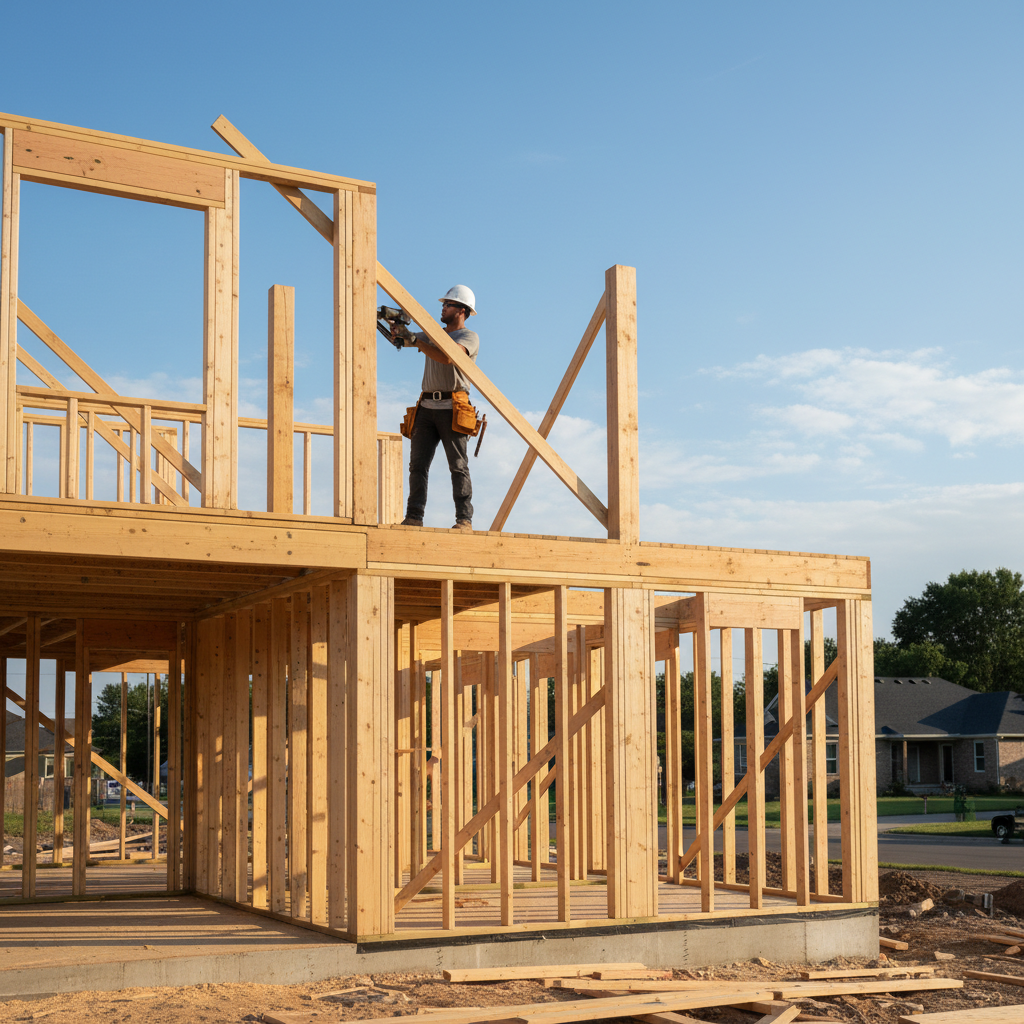
Understanding the building envelope starts with distinguishing between different heat transfer methods. Homeowners often ask if thick insulation is enough to achieve energy efficient new home construction goals. The answer is no. While insulation resists conduction, which is the transfer of heat through solid materials, it does little to stop convection, the movement of heat via air currents. Think of a wool sweater on a gusty winter day in Jamesport; it provides warmth, but without a windbreaker, the wind cuts right through the fibers. Air sealing serves as that windbreaker for your home.
In a new build, air leakage occurs at thousands of tiny gaps that, if combined, would equal leaving a window wide open year-round. As a Missouri custom home builder, we focus on critical transition points that are often overlooked in standard framing. We prioritize sealing top plates where interior walls meet the attic, rim joists where the floor system meets the foundation, and every plumbing or electrical penetration that breaks the exterior envelope. These are the areas where conditioned air escapes and unconditioned, dusty attic air or damp crawlspace air enters the living space.
This airtightness is particularly vital for managing Missouri’s intense summer humidity. When warm, moist air leaks into cooled wall cavities, it reaches its dew point and condenses into liquid water. Over time, this causes structural rot and indoor air quality issues. By integrating advanced air sealing into our professional residential building services, we ensure that the building envelope remains a controlled environment, preventing the hidden moisture damage that common building practices often ignore.
Selecting the Best Insulation Materials for Missouri Homes
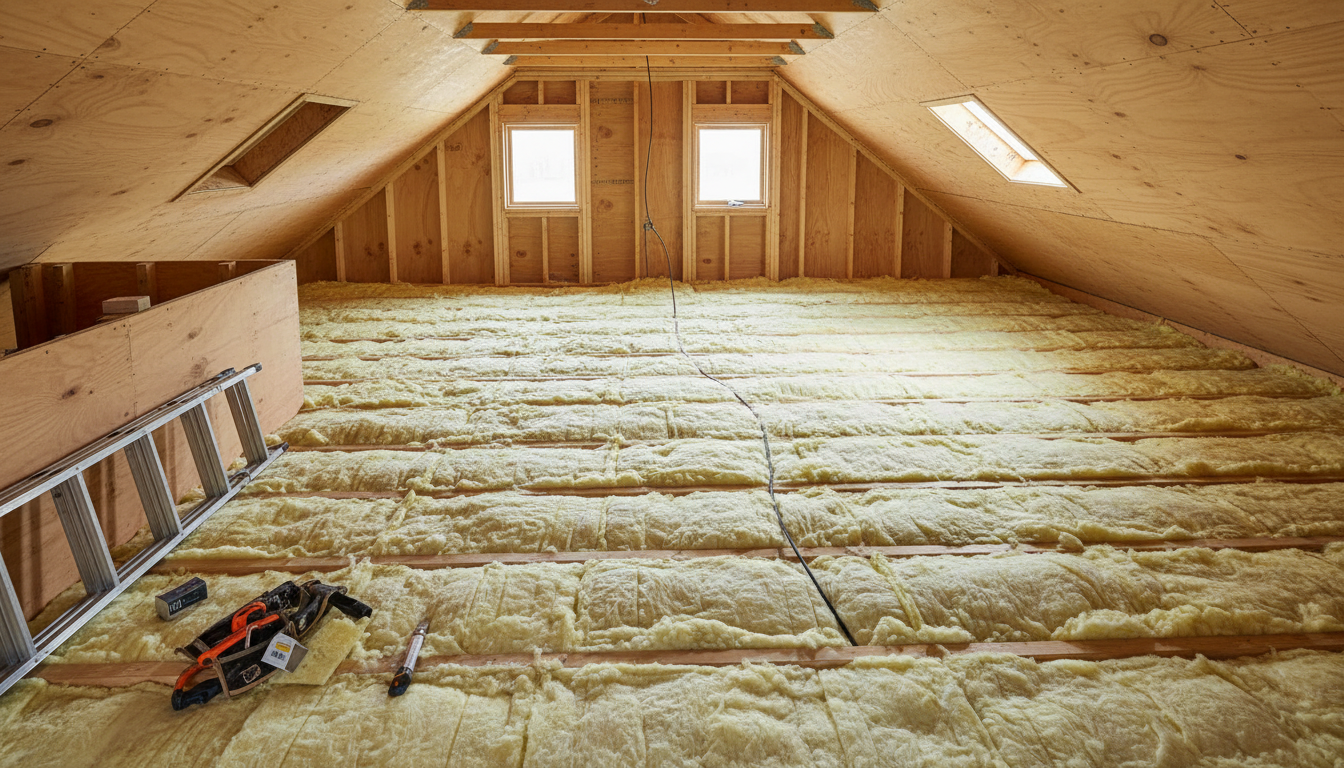
Once the building envelope is designed for airtightness, the choice of insulation materials determines how effectively the structure resists heat flow. In Northwest Missouri, the performance of these materials is measured by their R-value, or resistance to heat conduction. While many standard builds utilize basic fiberglass batts, achieving high-performance energy efficient new home construction requires a more nuanced selection process based on the specific application within the home.
Material | Application | Pros | Cons |
|---|---|---|---|
Fiberglass Batts | Walls & Floors | Cost-effective, familiar | Prone to installation gaps, lower R-value per inch |
Blown-in Cellulose | Attics | High recycled content, fills odd gaps, fire-resistant | Can settle over time, requires specialized equipment |
Spray Foam | Roof Decks & Rims | Superior air sealing and R-value | Highest cost, requires professional ventilation planning |
For Jamesport homeowners, we advise moving beyond minimum code requirements. Standard R-15 wall insulation often falls short during a deep Missouri freeze. Instead, we recommend R-21 high density insulation within 2x6 wall cavities. In the attic, aiming for R-49 or higher is critical. This level of thermal resistance prevents interior heat from migrating to the roof deck, which is the primary cause of ice dams. When snow melts due to escaping house heat and then refreezes at the cold eaves, it creates a dam that forces water under the shingles, leading to significant structural damage.
Budget prioritization should also account for thermal bridging. Even the best insulation loses effectiveness because wooden studs act as bridges, conducting heat directly through the wall. As an experienced Missouri custom home builder, we often suggest mitigating this with continuous exterior insulation. Adding a layer of rigid foam over the exterior sheathing creates a thermal break, significantly increasing the total assembly R-value. While spray foam offers the highest performance for unvented attics, homeowners often find the best cost to benefit ratio by combining advanced air sealing with blown-in cellulose and continuous exterior panels. These professional residential building services ensure the investment is focused on permanent components that cannot be easily upgraded after the drywall is installed.
Understanding HERS Scores and Energy Star Standards
Quantifying the effectiveness of your insulation and framing choices requires an objective metric. The Home Energy Rating System (HERS) Index serves as the industry standard for measuring energy performance. Think of a HERS score like a miles per gallon rating for your house; a lower score indicates a more efficient building. A home with a HERS Index of 60 is 40 percent more energy efficient than a standard new home built to 2006 codes. These numbers translate directly to lower monthly utility bills and a higher resale value for the property owner.
When vetting professional residential building services, ask if the team utilizes third party energy raters. An independent rater performs physical inspections and testing to verify that the energy efficient new home construction meets its projected design goals. This oversight is central to the Energy Star for New Homes certification. Unlike basic Missouri building codes, which establish the minimum legal safety and efficiency requirements, Energy Star certification requires a comprehensive suite of mandatory features. This includes high performance windows, tight ductwork, and advanced framing techniques that high volume national builders often bypass. As a Missouri custom home builder, we emphasize these standards because they ensure the structure operates as a high performance system rather than just a collection of disconnected parts. Verified performance data provides the peace of mind that your home will remain comfortable during Jamesport's most extreme temperature swings.
Windows and HVAC: The Other Half of the Energy Efficiency Equation
While the building envelope and insulation provide the structural foundation, windows and mechanical systems function as the lungs and eyes of the home. For energy efficient new home construction in Northwest Missouri, windows must be selected for their thermal performance rather than just their aesthetics. We specify windows equipped with Low-E (low-emissivity) coatings and Argon gas fills. These coatings consist of microscopic metallic layers that reflect long-wave infrared energy, keeping furnace heat inside during Jamesport winters and blocking solar heat gain during humid July afternoons. The Argon gas injected between the panes acts as a superior insulator compared to standard air, effectively reducing the convective loop that often makes glass surfaces feel cold to the touch.
Correctly matching the HVAC system to these high-performance windows is critical to long-term comfort. A common mistake in residential building is the "bigger is better" approach to furnace and air conditioner sizing. When a Missouri custom home builder installs an oversized unit in a tightly sealed house, the system short-cycles. It reaches the thermostat's temperature setting so quickly that it fails to run long enough to pull moisture out of the air. In our regional climate, this results in a cold but clammy indoor environment that invites mold growth.
To prevent this, we utilize Manual J calculations for every project. This technical process accounts for the home's orientation, insulation R-values, and airtightness to determine the exact BTU requirements for the structure. Furthermore, our professional residential building services emphasize rigorous duct sealing, especially for runs through unconditioned crawlspaces or attics. Any leak in these areas forces the system to work harder while pulling dust and humidity directly into the living space, undermining the integrity of the entire energy management system.
Key Questions to Ask Your Missouri Home Builder Before Construction
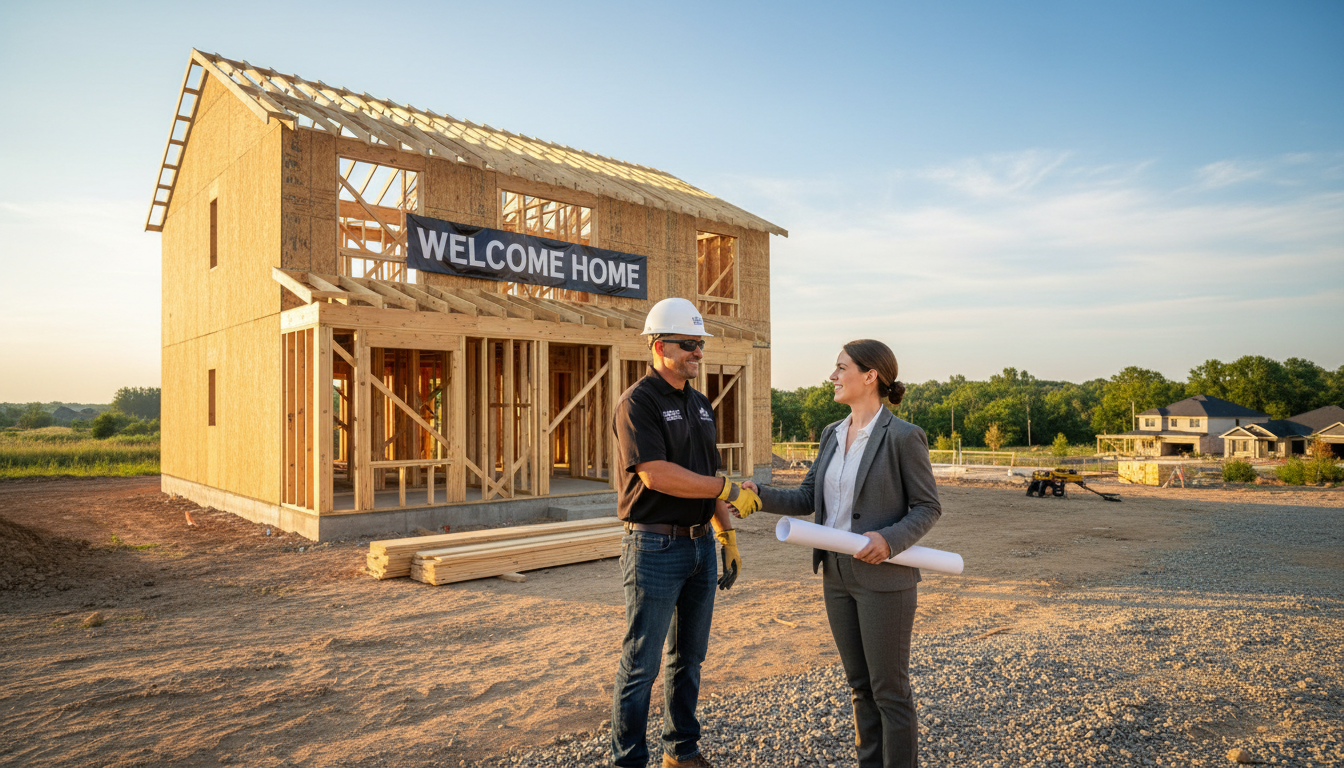
A successful build requires clear communication about performance goals long before the first shovel hits the ground. When evaluating professional residential building services, the initial consultation is the time to drill down into technical specifics. Asking the right questions ensures that your Missouri custom home builder prioritizes the structural integrity and efficiency of the home over purely cosmetic finishes.
Use this checklist to vet your builder's approach to energy efficient new home construction:
What is your strategy for thermal breaking in the framing? Look for answers that include continuous exterior insulation or advanced framing techniques designed to reduce the number of studs that conduct heat directly to the outside.
Do you perform a blower door test before closing? This test is the only way to objectively verify that the air sealing targets were met. It provides a specific ACH (Air Changes per Hour) rating that proves the home's envelope is tight.
Which energy upgrades provide the fastest return on investment in the Jamesport area? Because our region often relies on rural electric cooperatives, focus on upgrades that reduce peak demand, such as high-performance attic insulation and heat pump technology.
How do you integrate moisture management with the air sealing plan? Ensure they have a plan for how the house "breathes" through controlled ventilation rather than accidental leaks.
When allocating your budget, prioritize "permanent" upgrades. It is simple to swap out a refrigerator or a smart thermostat five years down the road, but it is nearly impossible to upgrade wall insulation or window flashing once the drywall and siding are installed. Investing in the building envelope now ensures long-term comfort through every Missouri freeze and thaw cycle.